
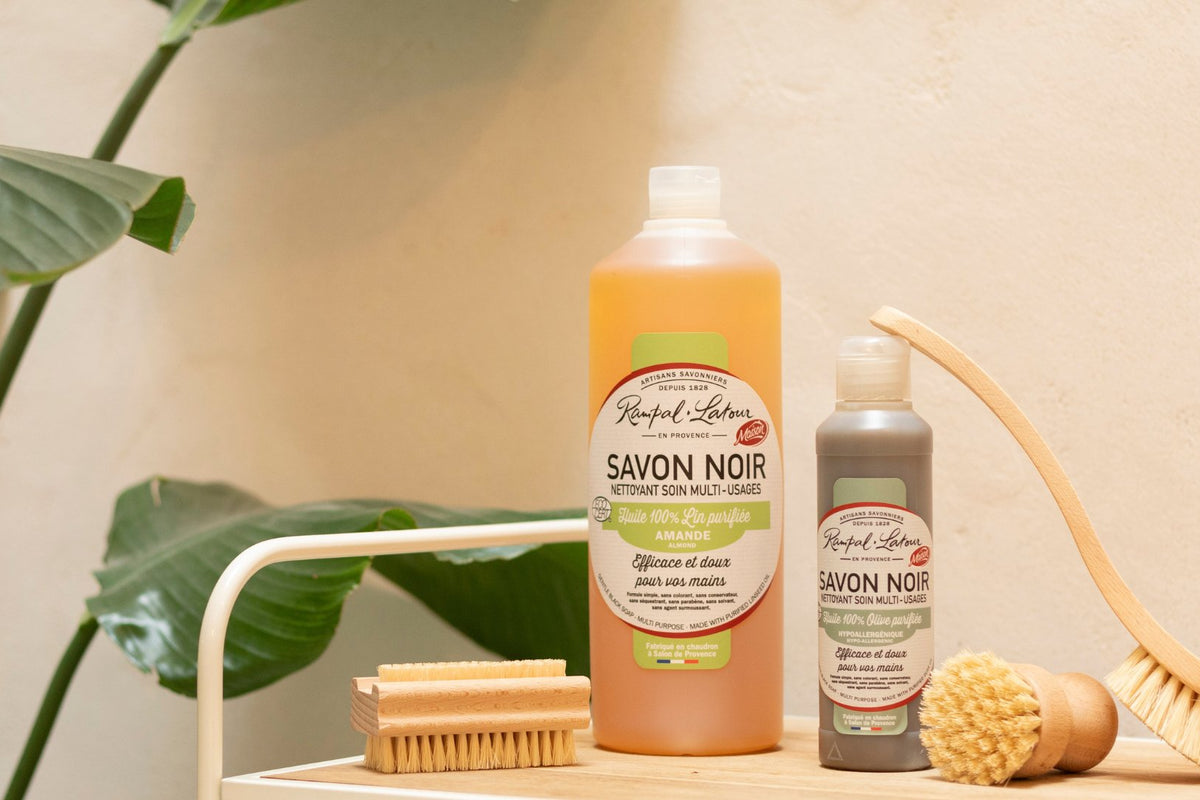


Originating centuries ago in the Mediterranean basin, black soap is a natural product renowned for its numerous benefits. Practical and effective, it boasts ideal properties suited to a wide range of uses. How do you use black soap for household cleaning ? What are its properties? This guide offers tips and tricks for using black soap as an effective cleaner for your home and a natural insecticide.
Black soap: a cleaner with multiple benefits
Cleaning products are essential for daily household chores. However, they contain toxic substances that are harmful to both health and the environment. It is therefore crucial to prioritize the use of eco-friendly and effective solutions for household cleaning.
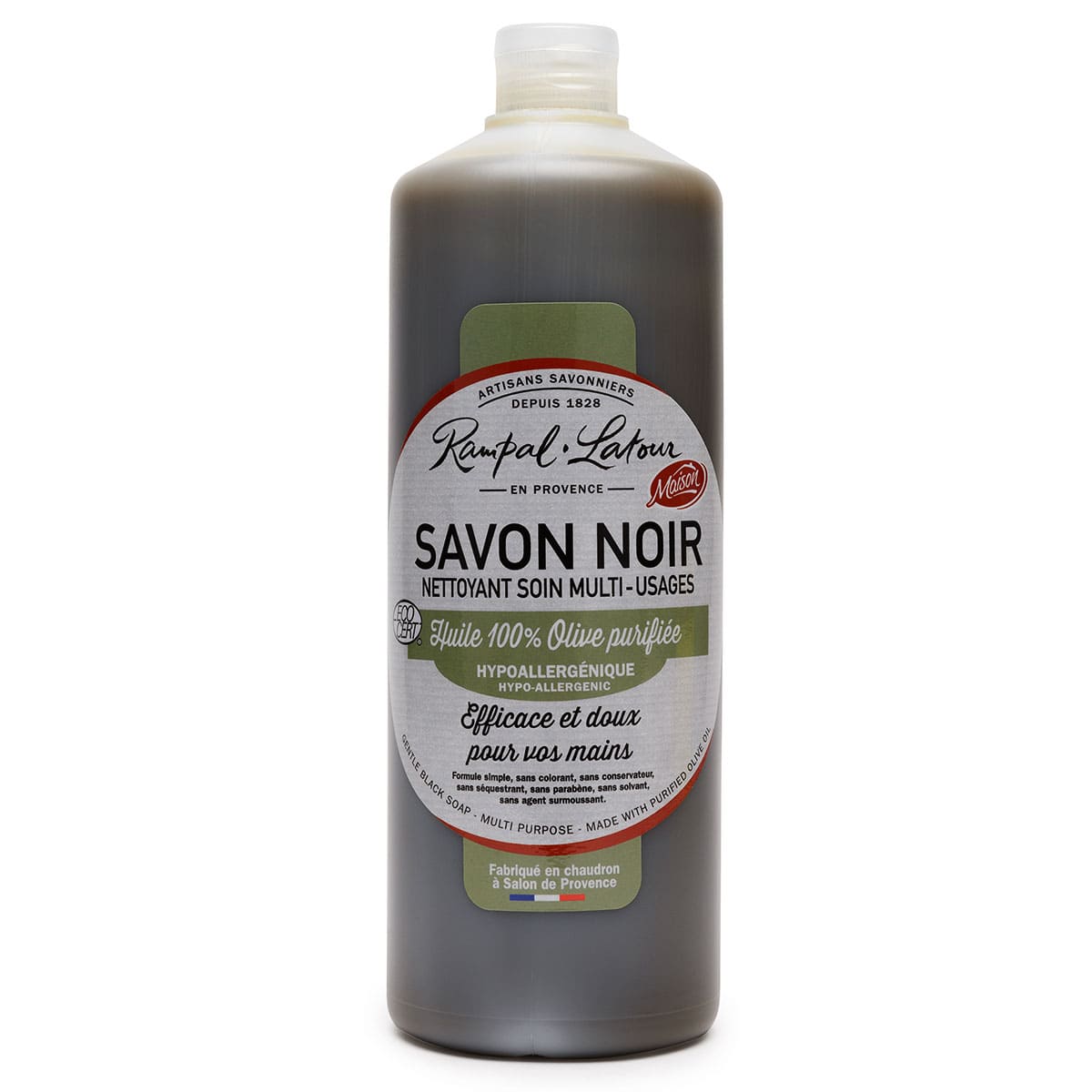
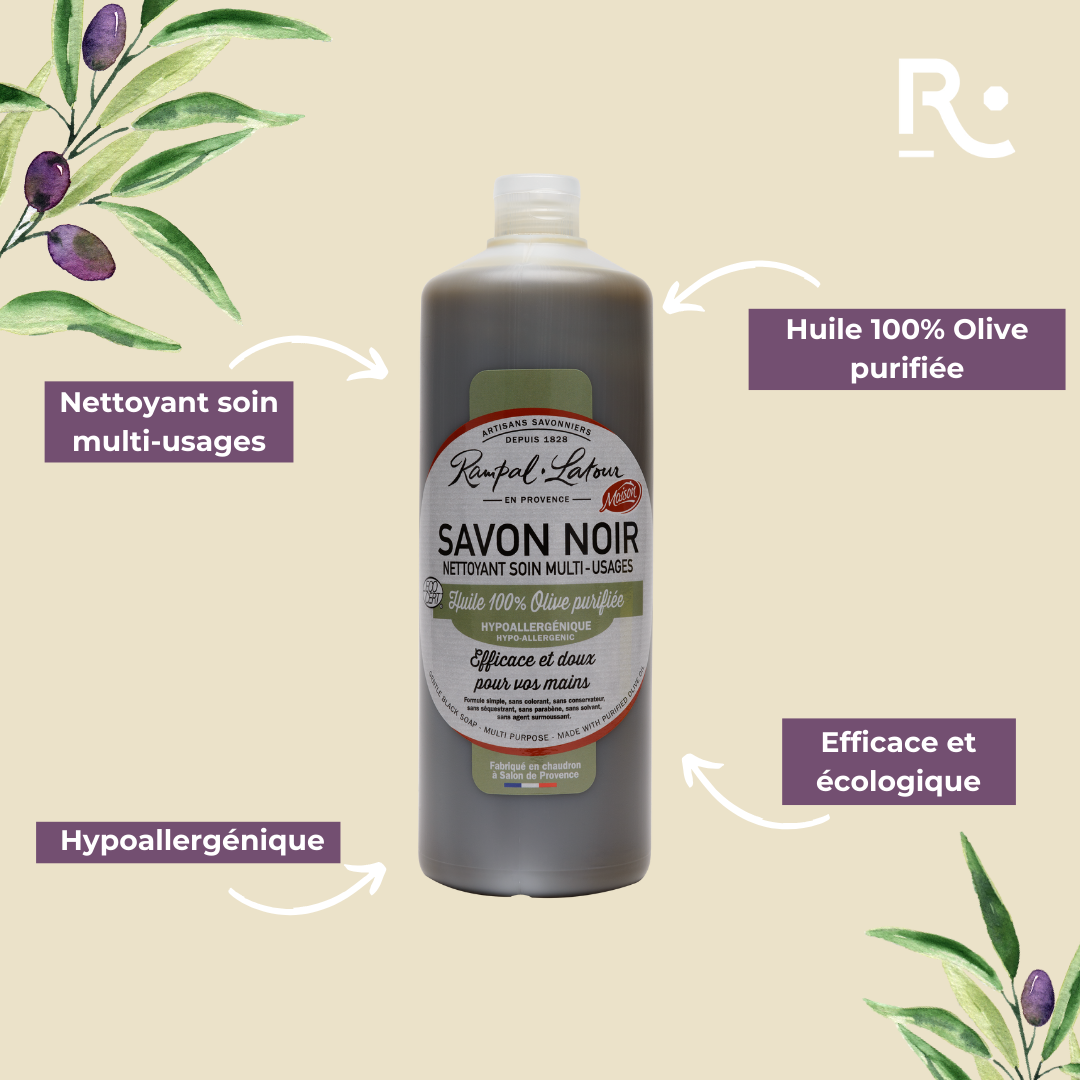
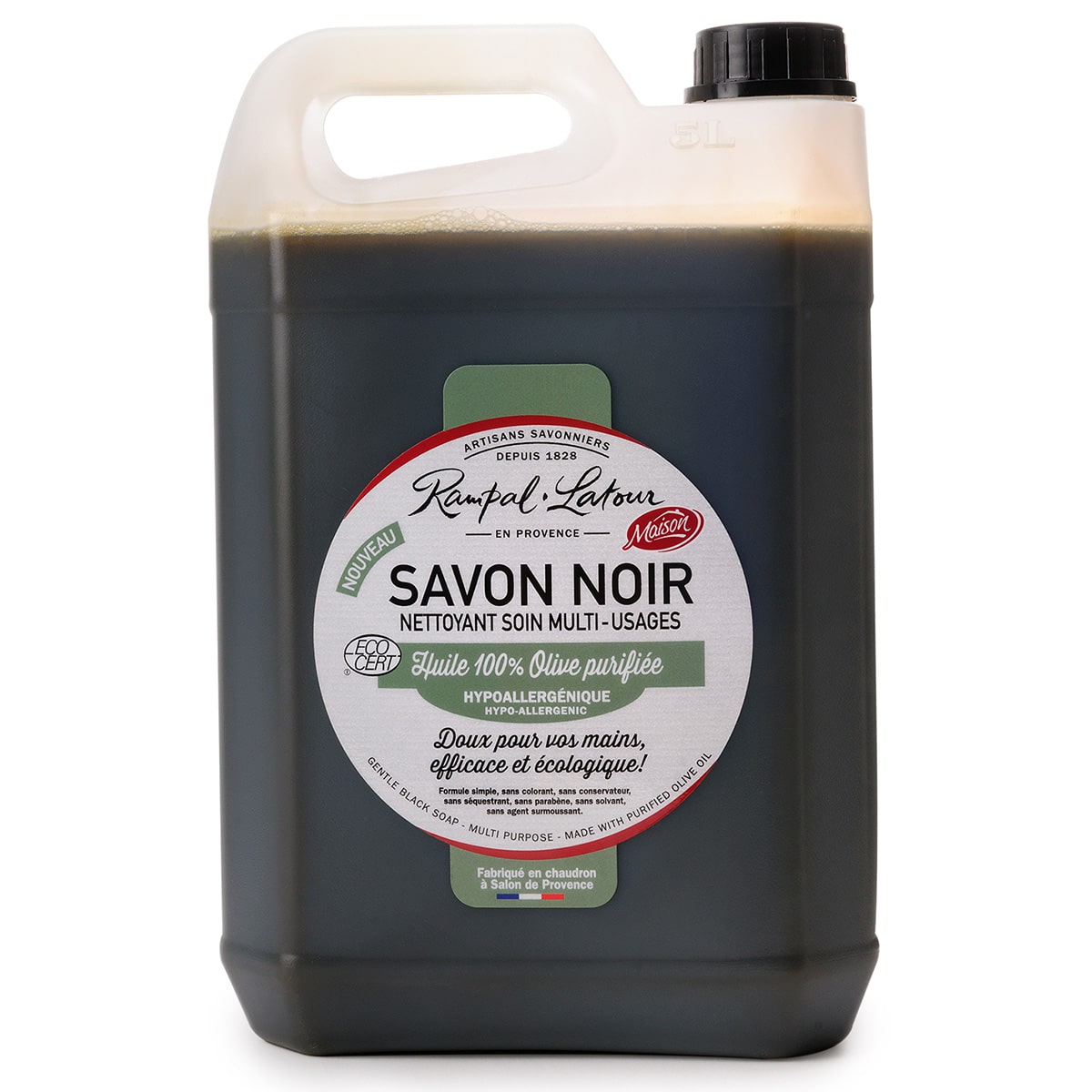
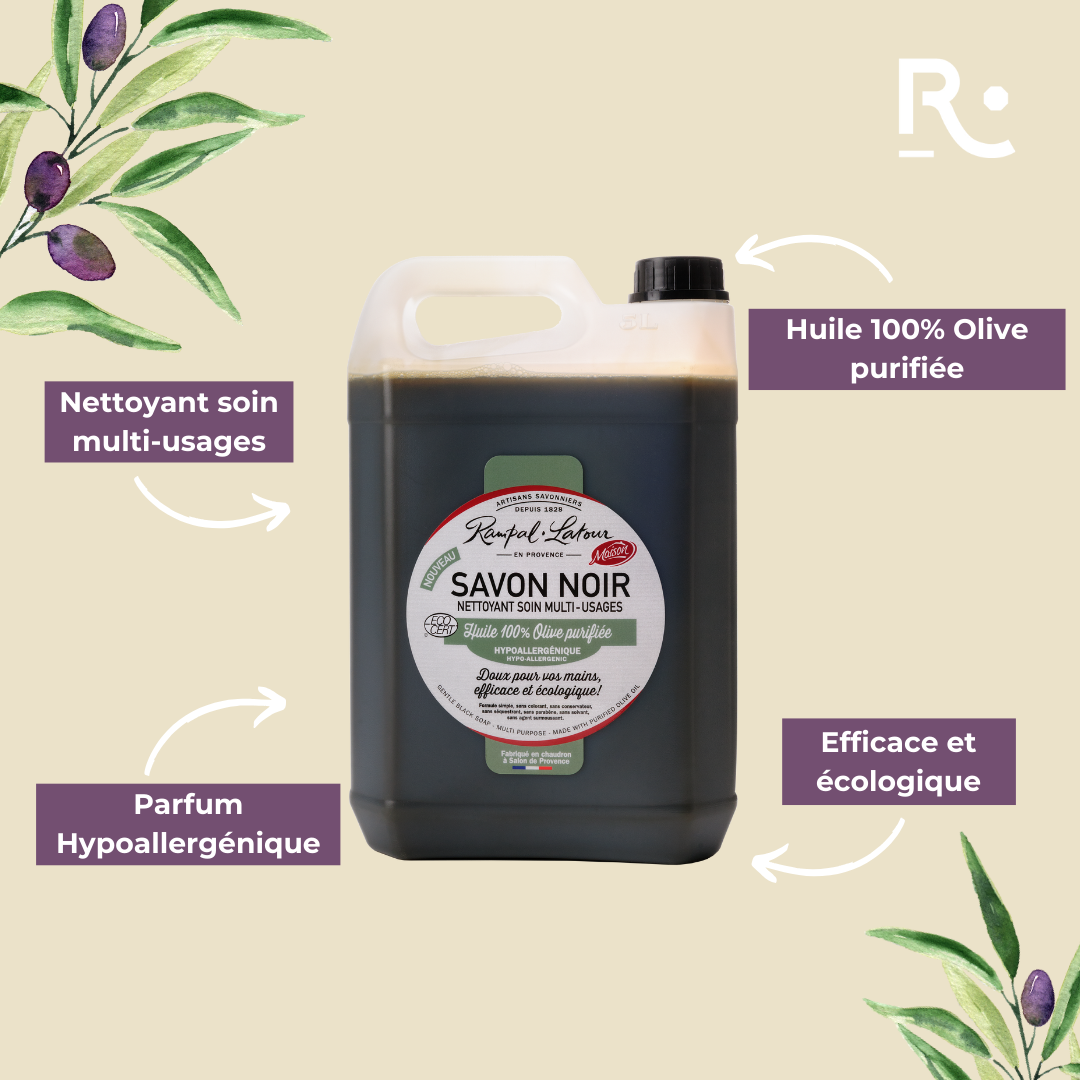
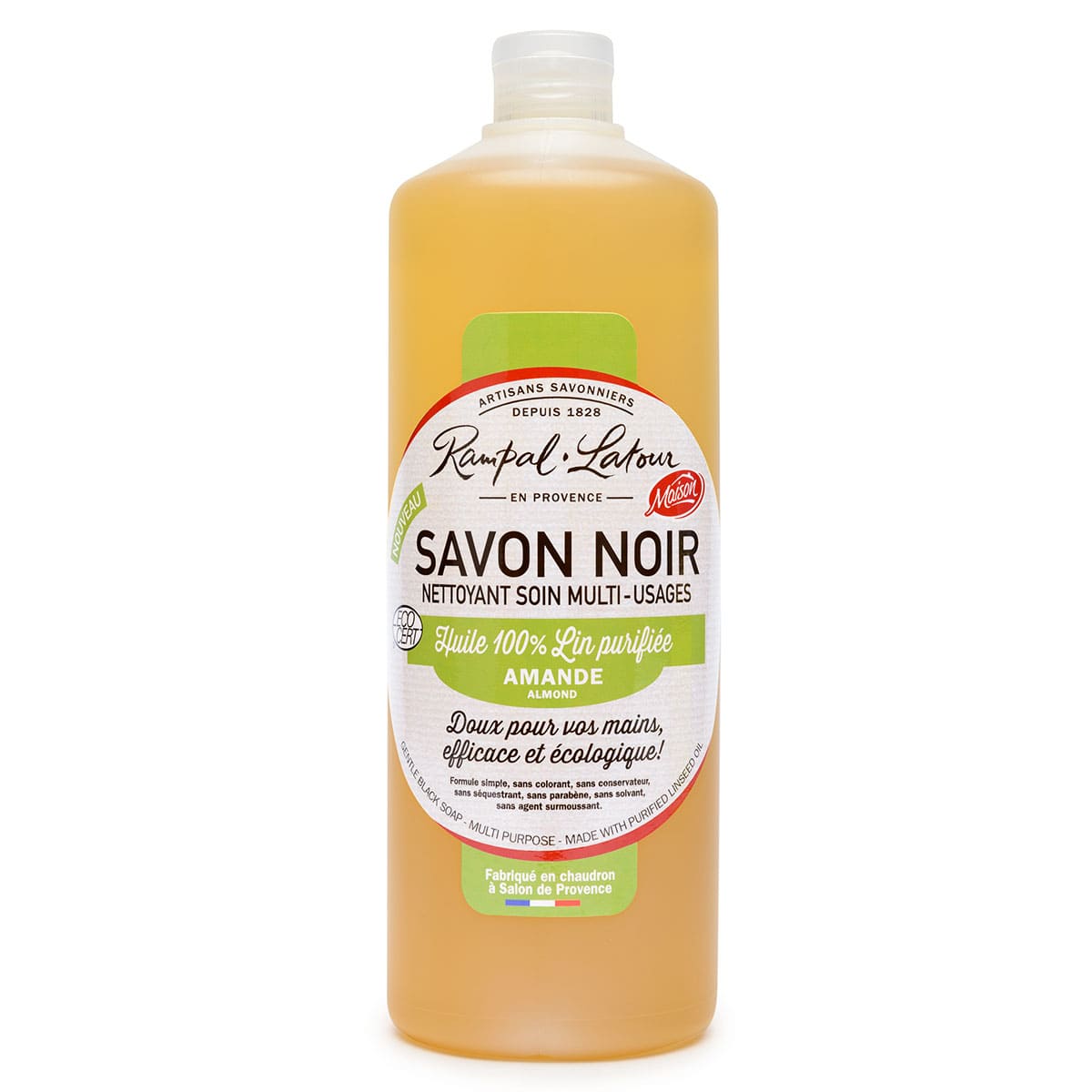
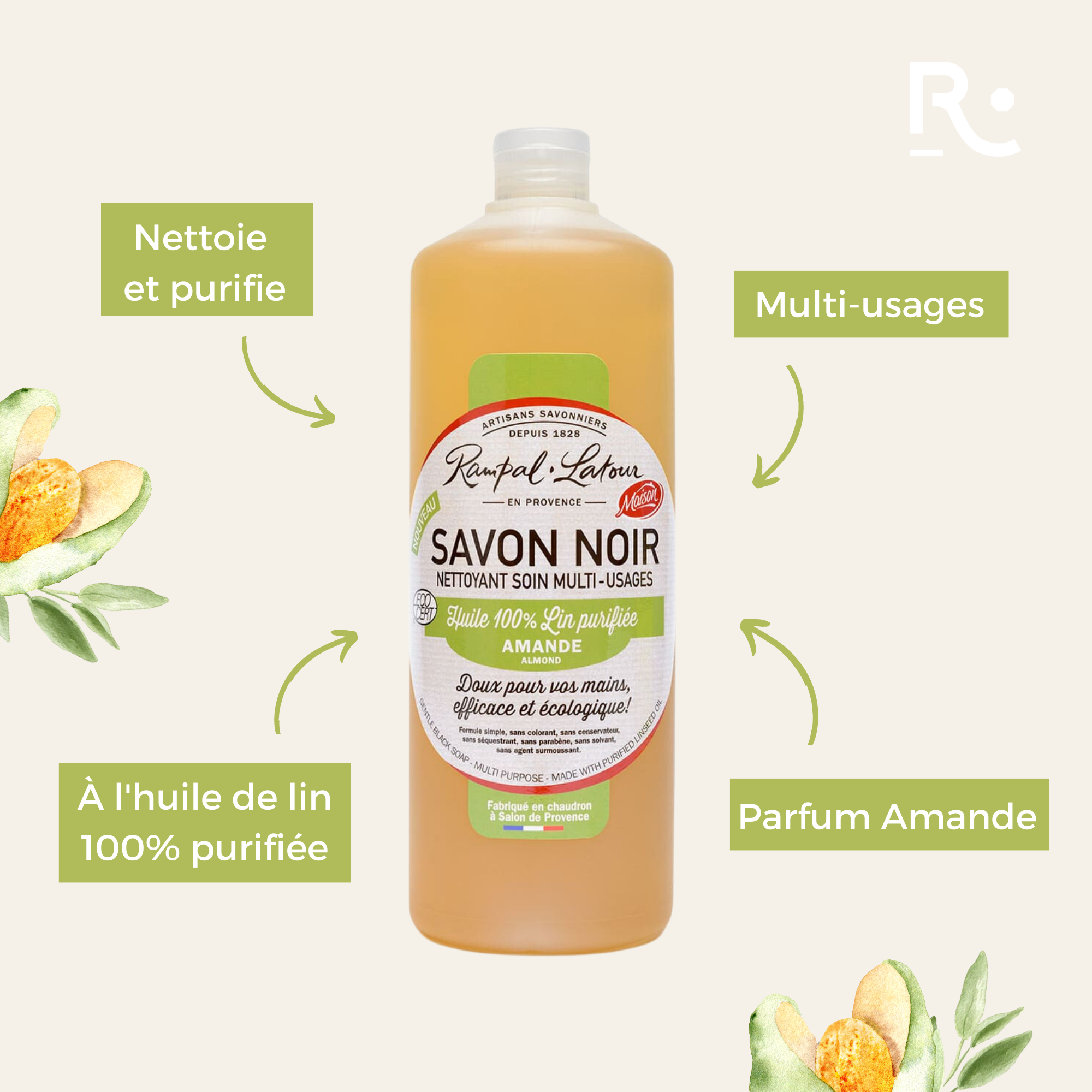
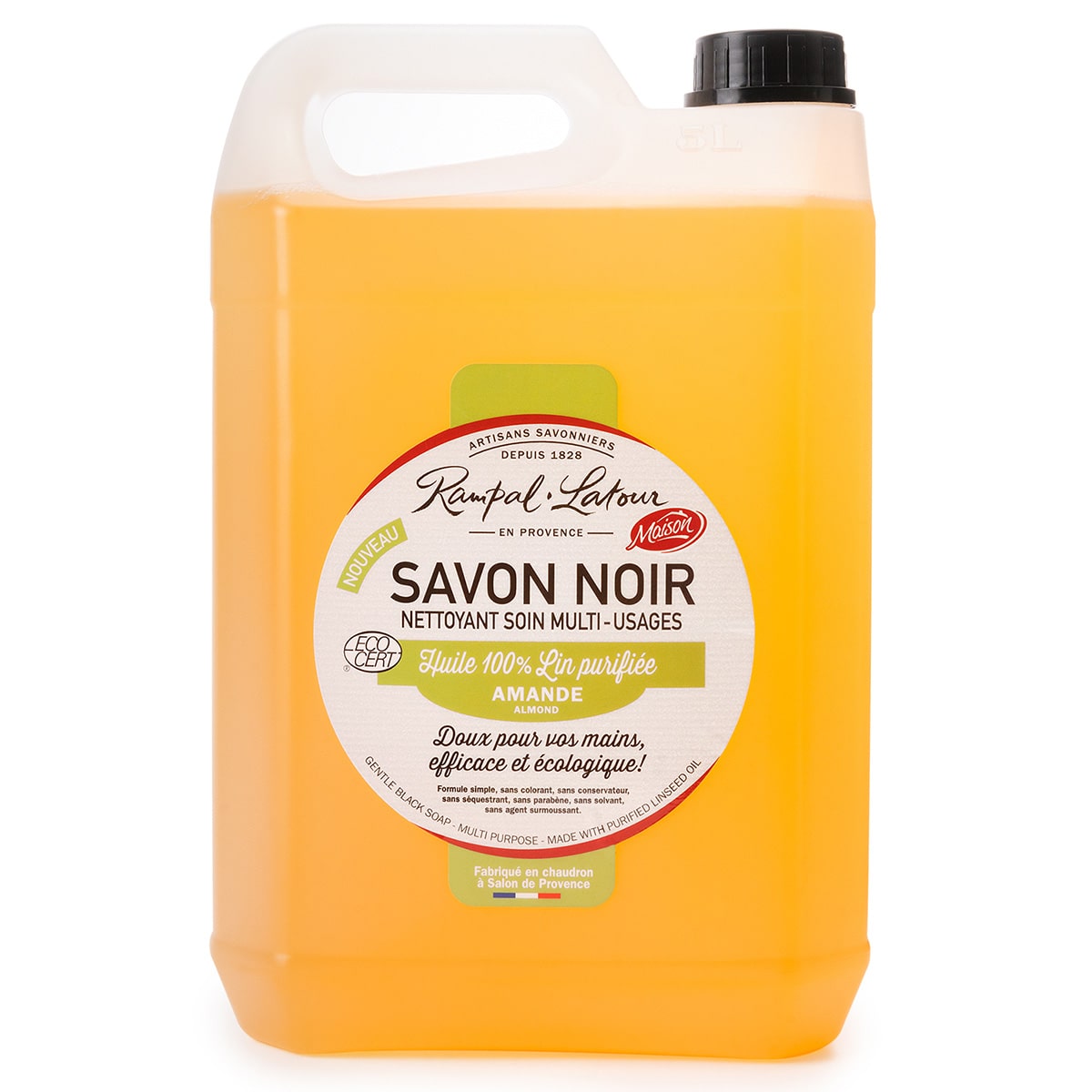
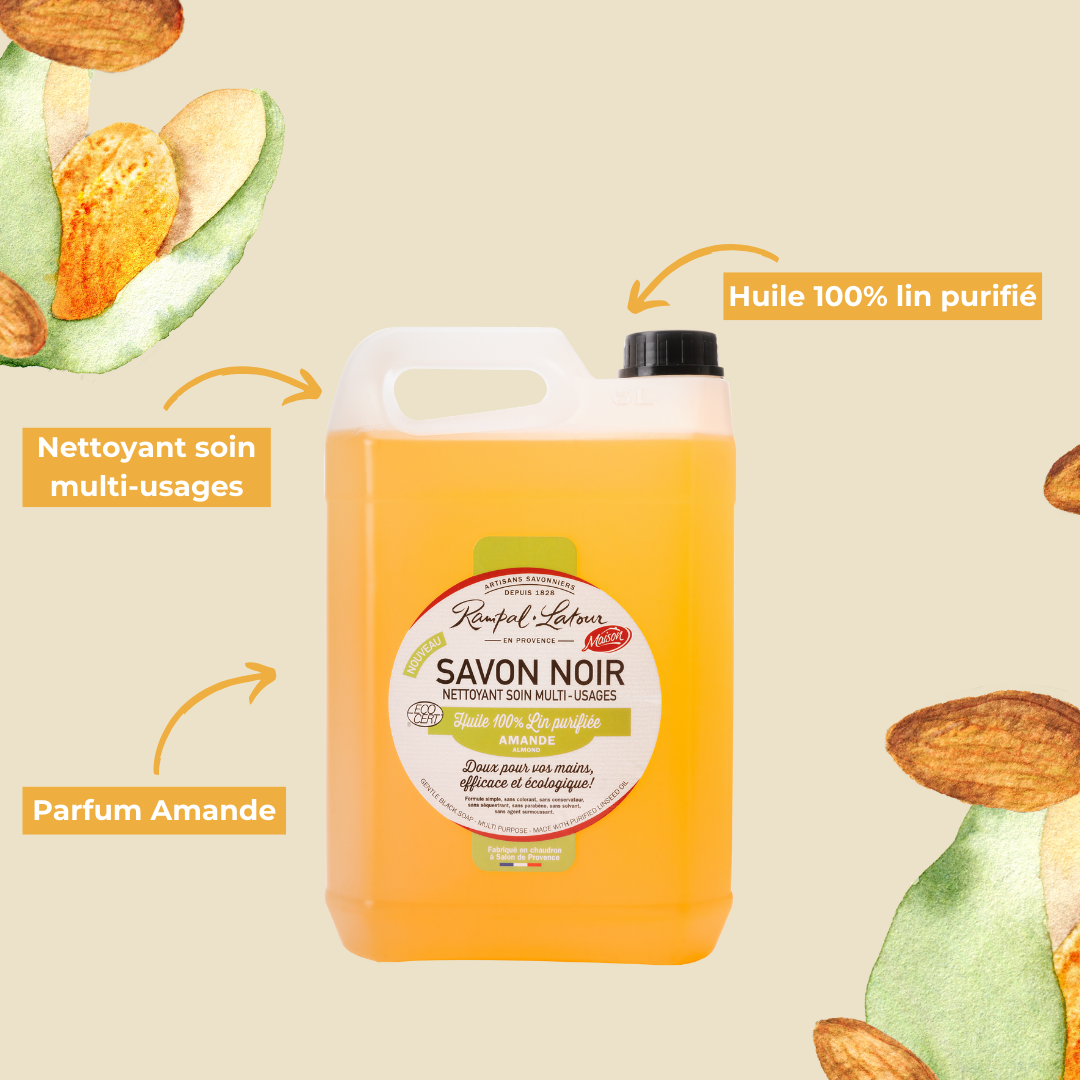
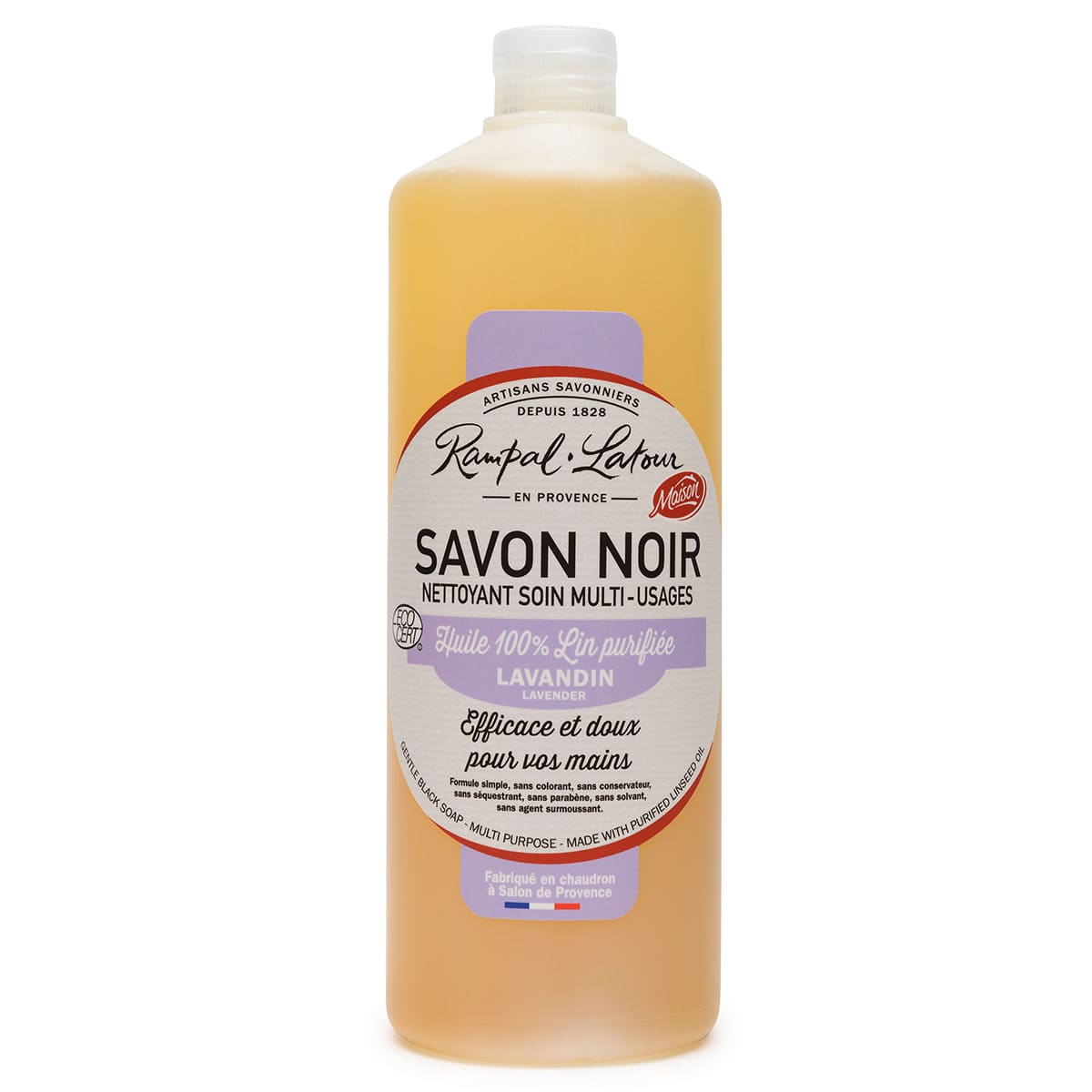
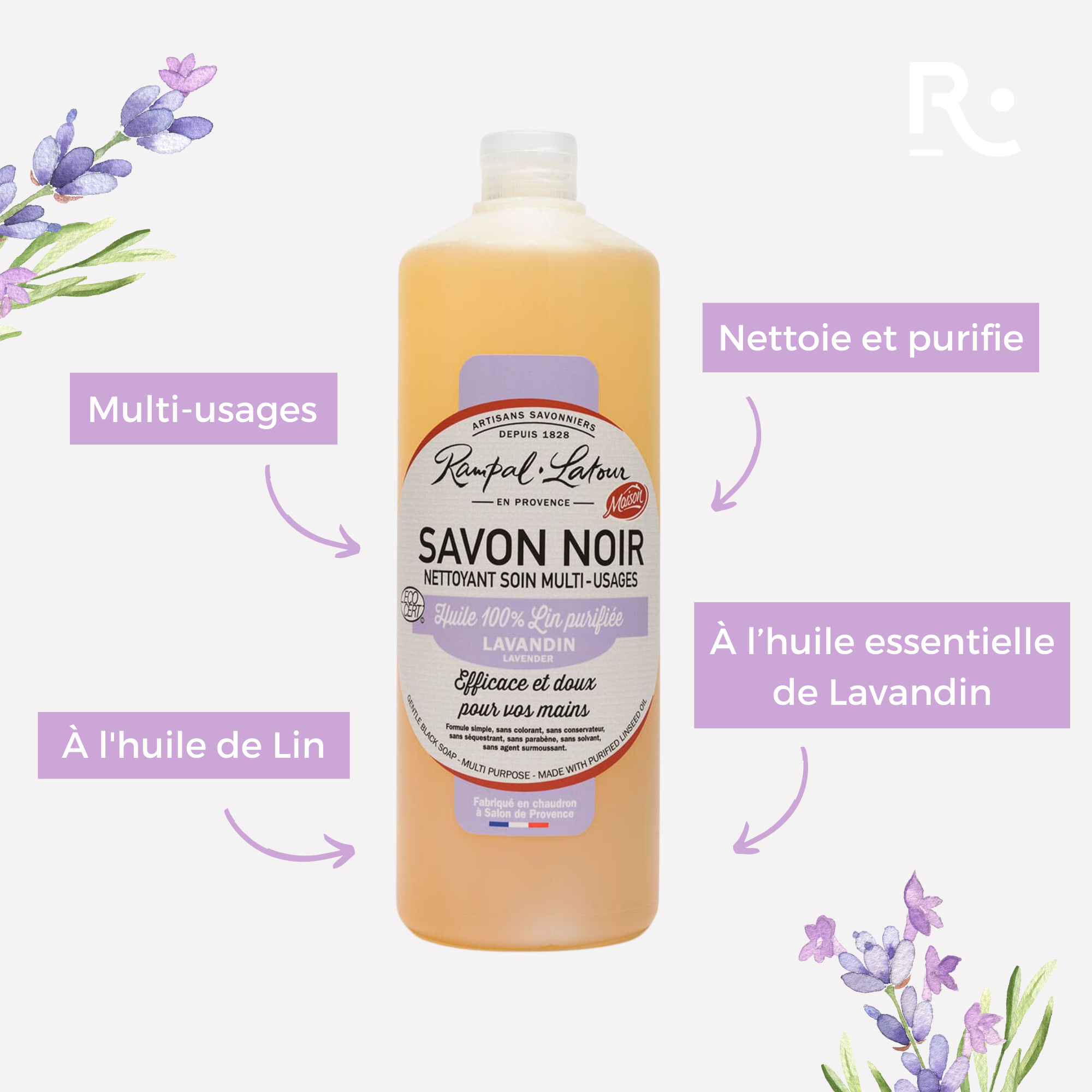
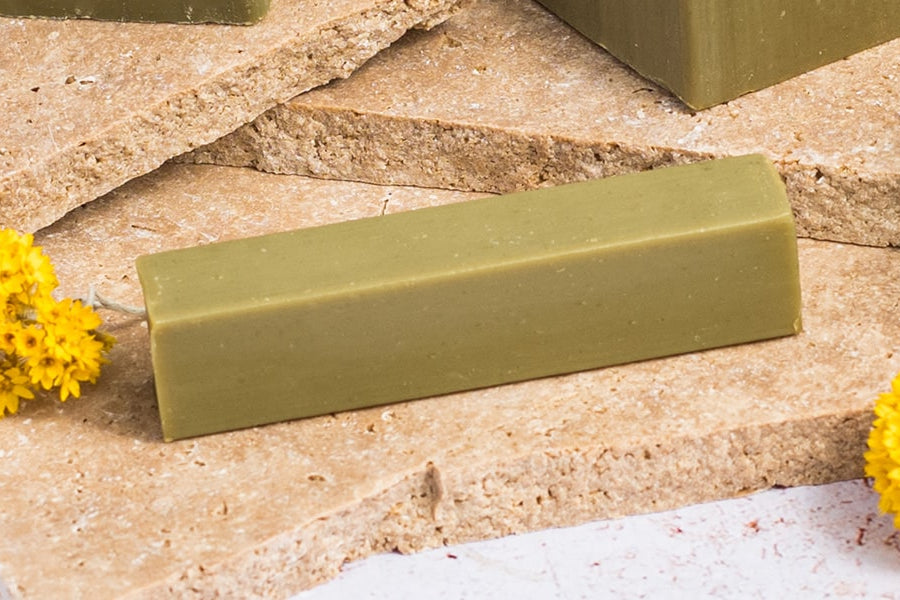
Used for decades, black soap is considered one of the best natural household products. This plant-based product is made from water, potash, and olive oil. Free of dyes and solvents, black soap is a natural cleaning product with very versatile uses.
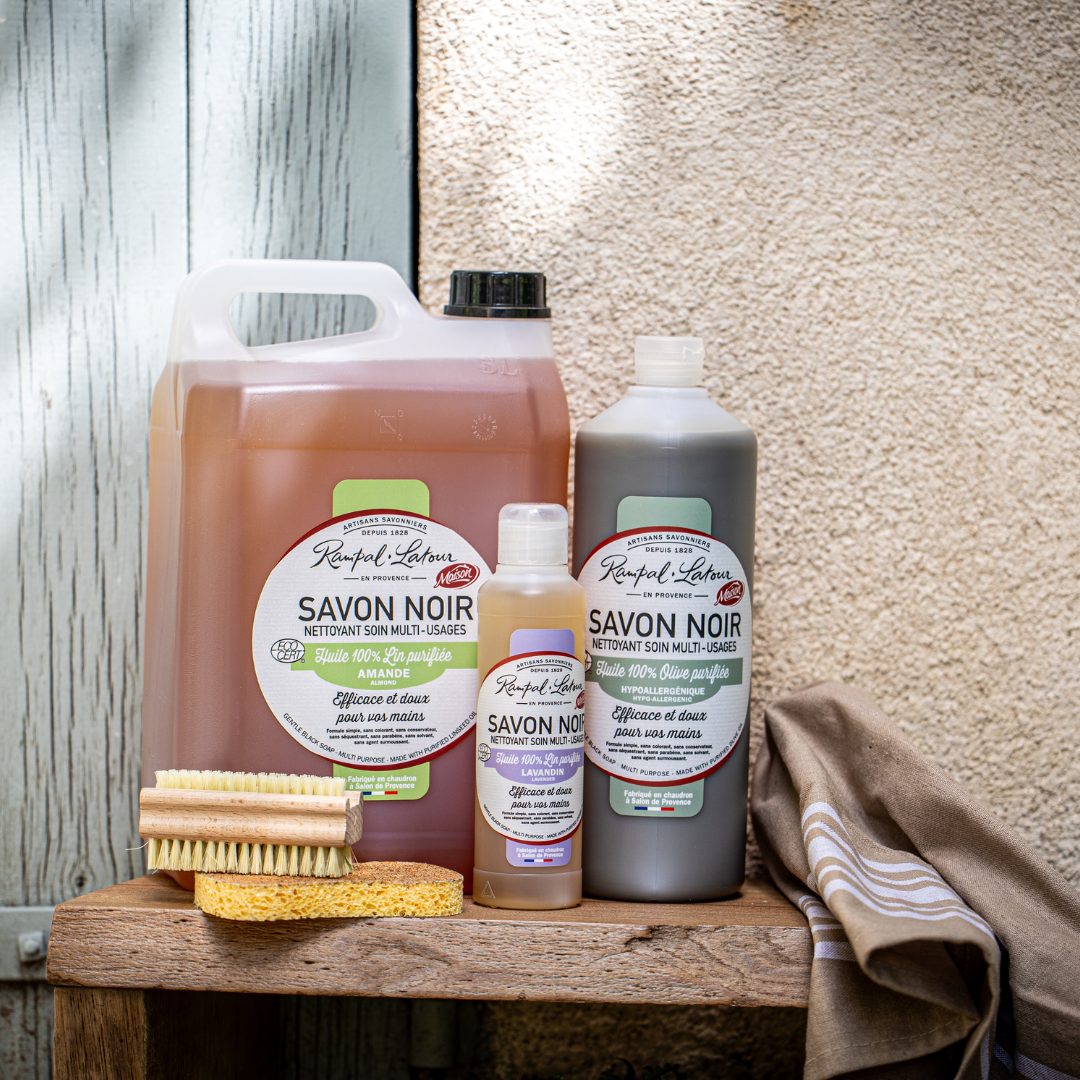
Black soap is generally sold:
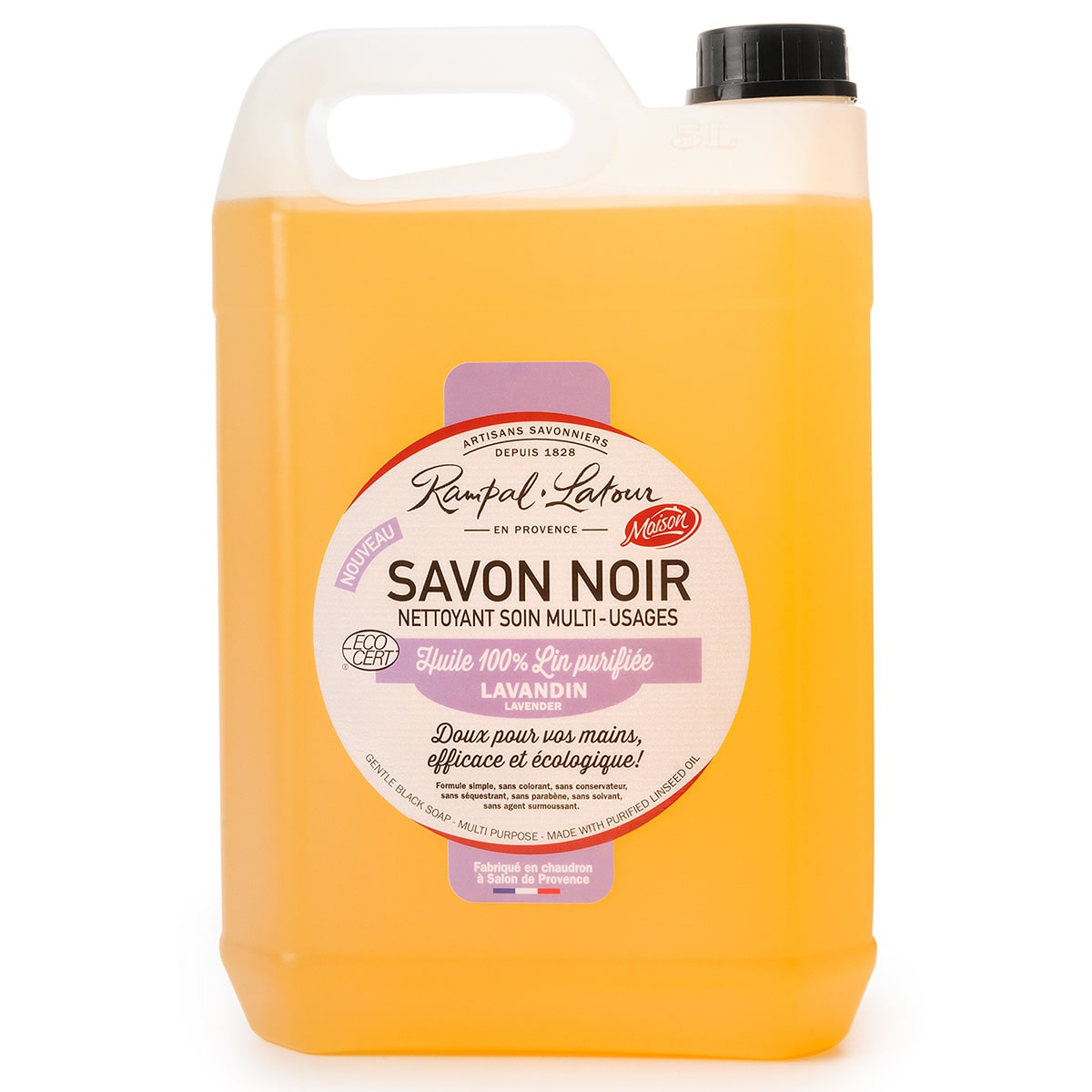
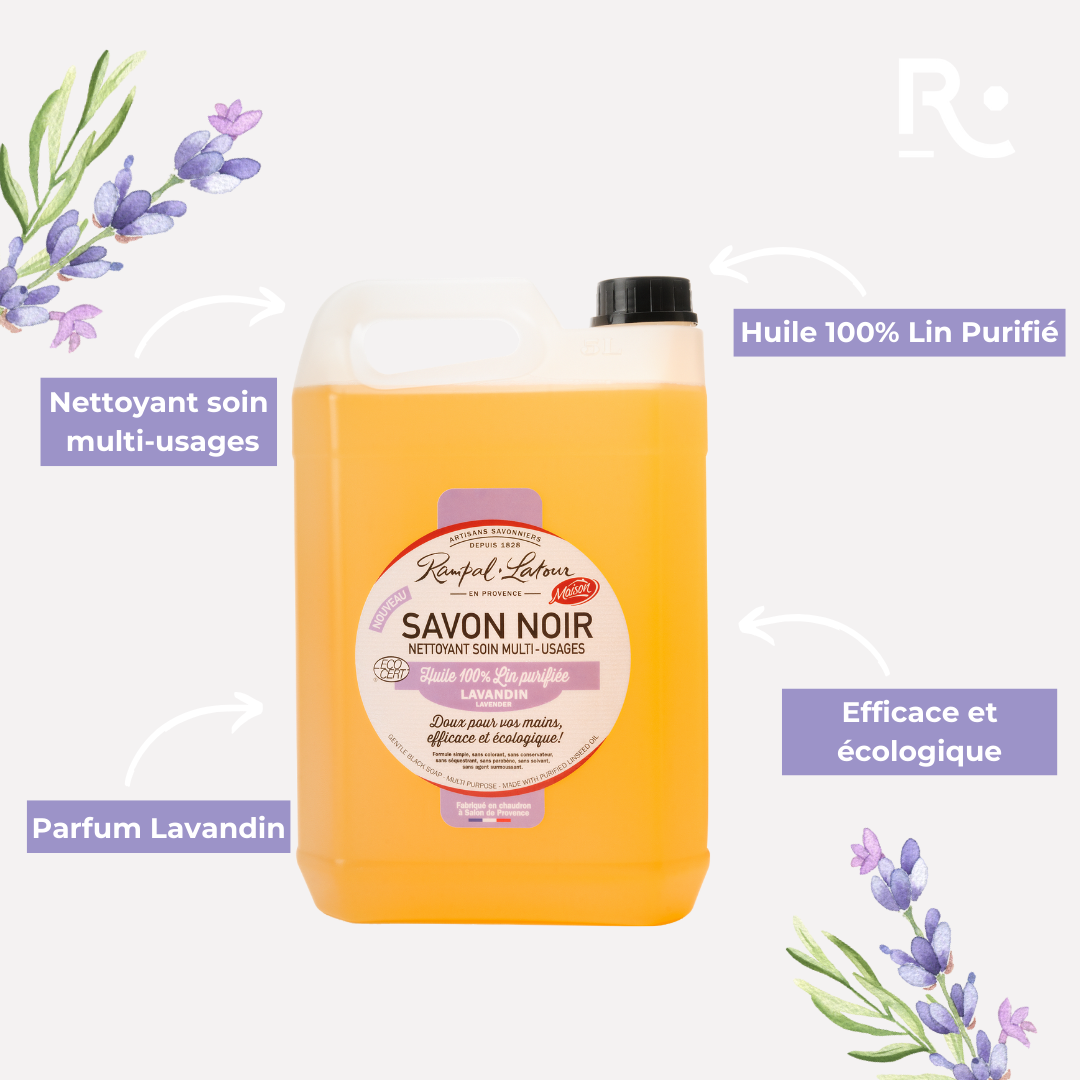
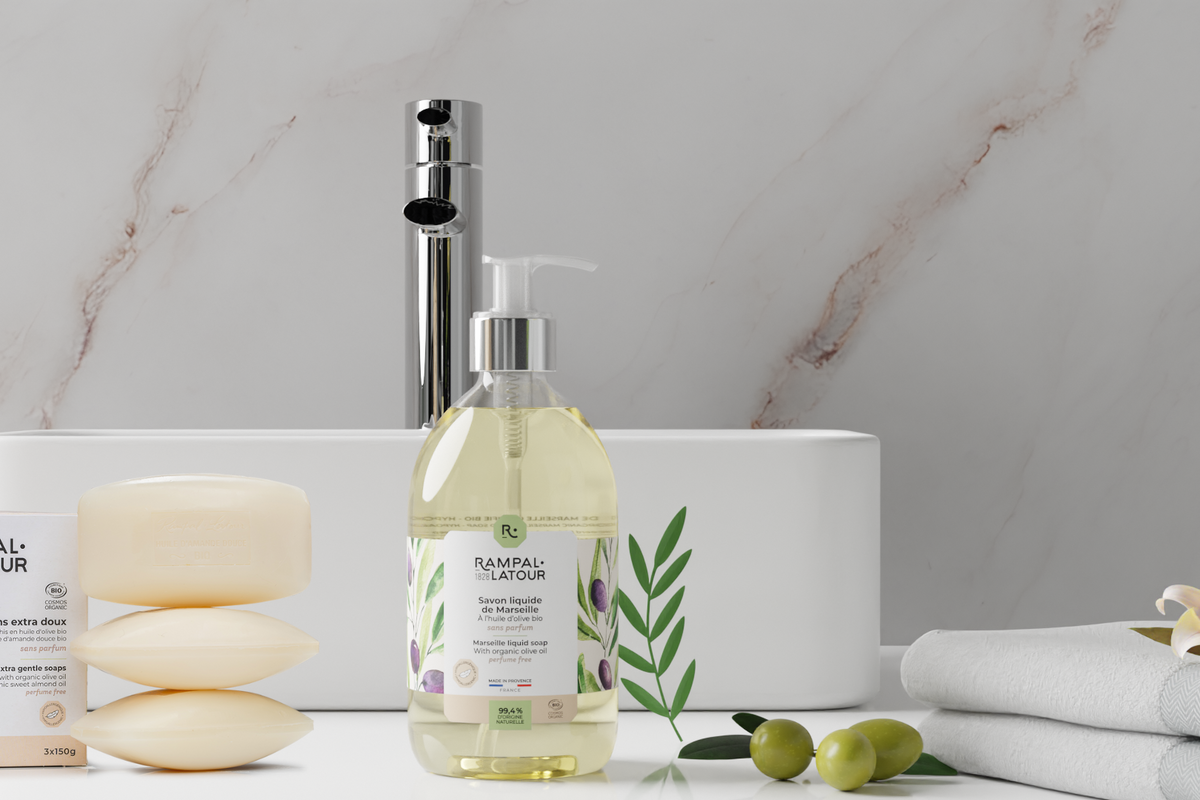
- In liquid and diluted form, liquid black soap ;
- In its thick, brown-colored form, soft black soap .
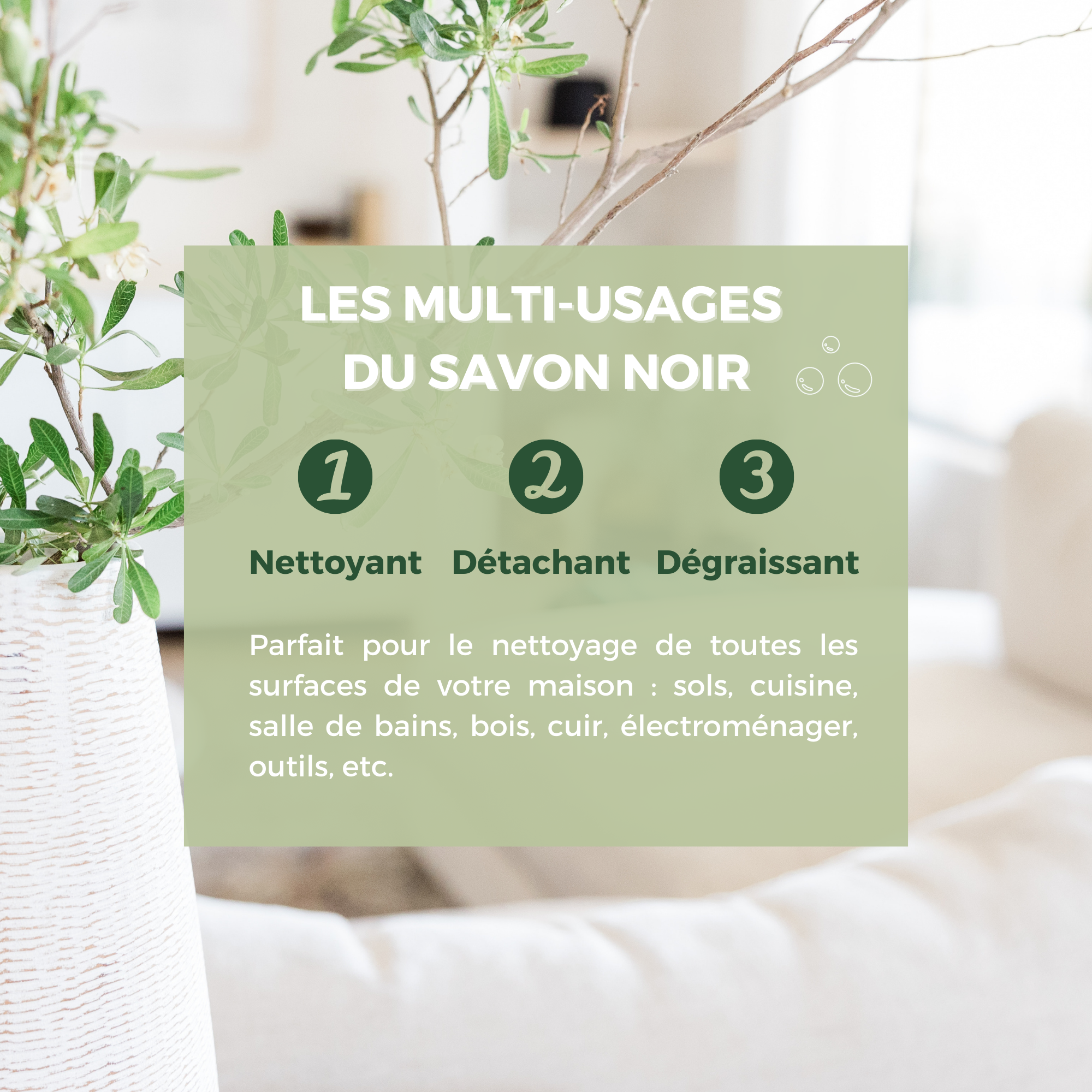
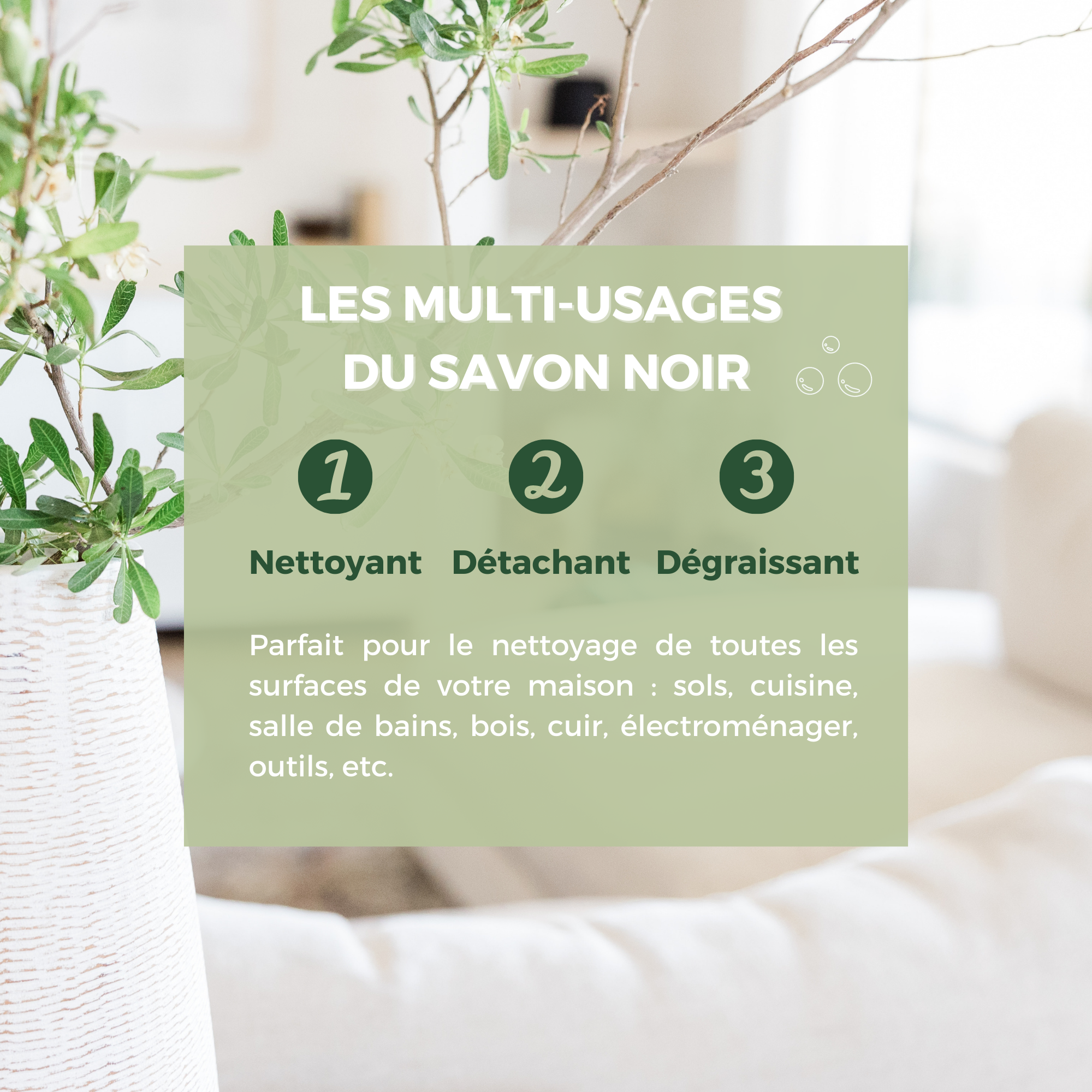
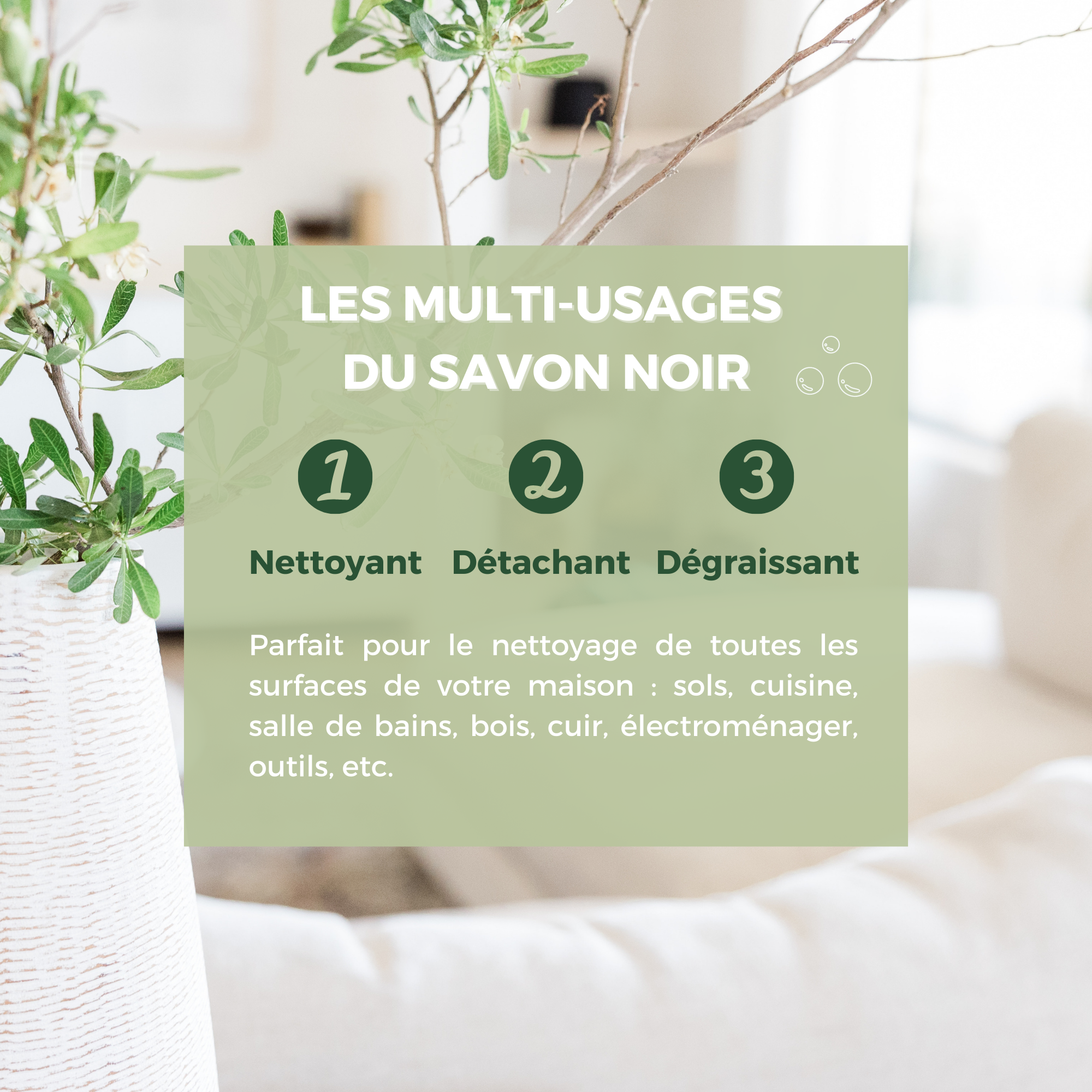
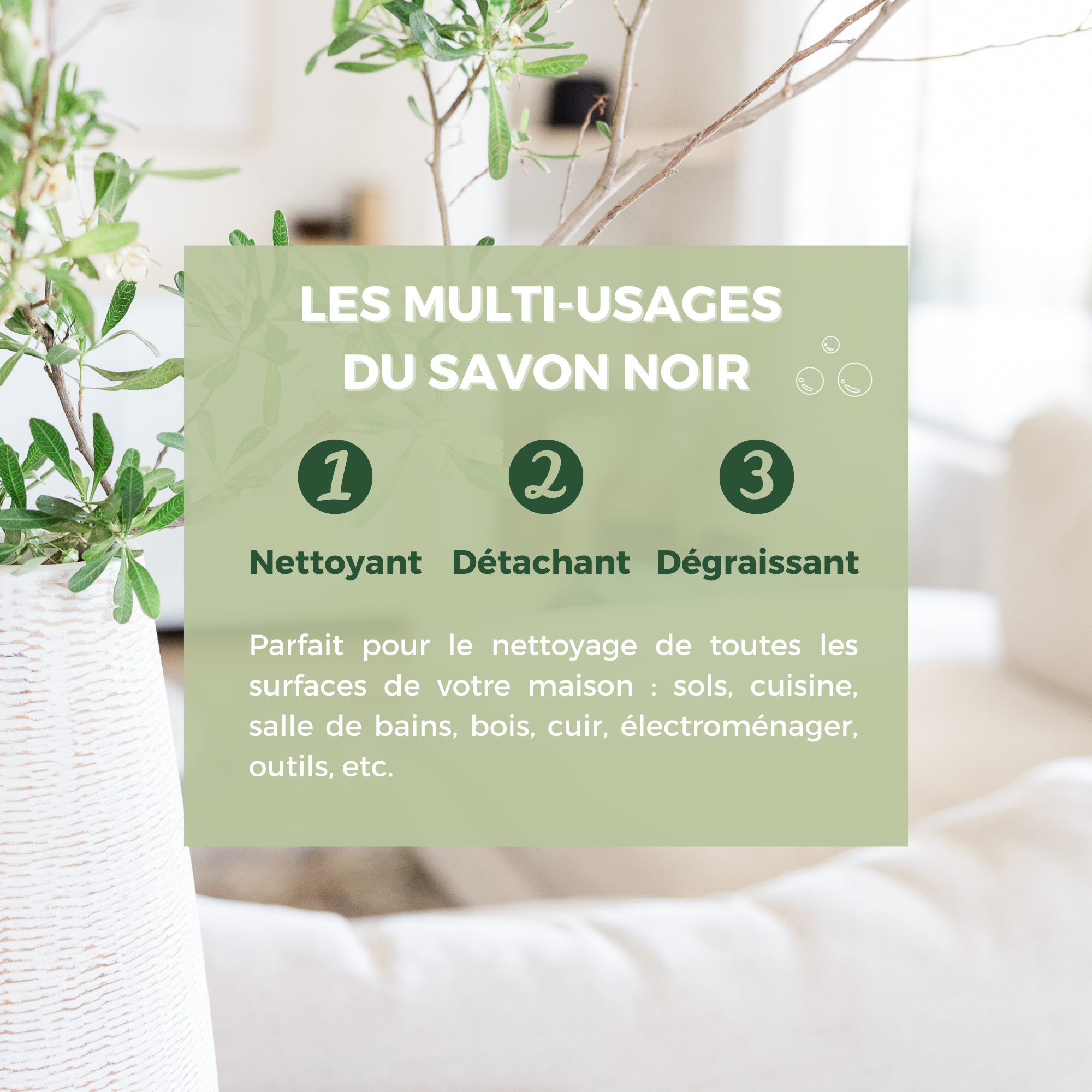
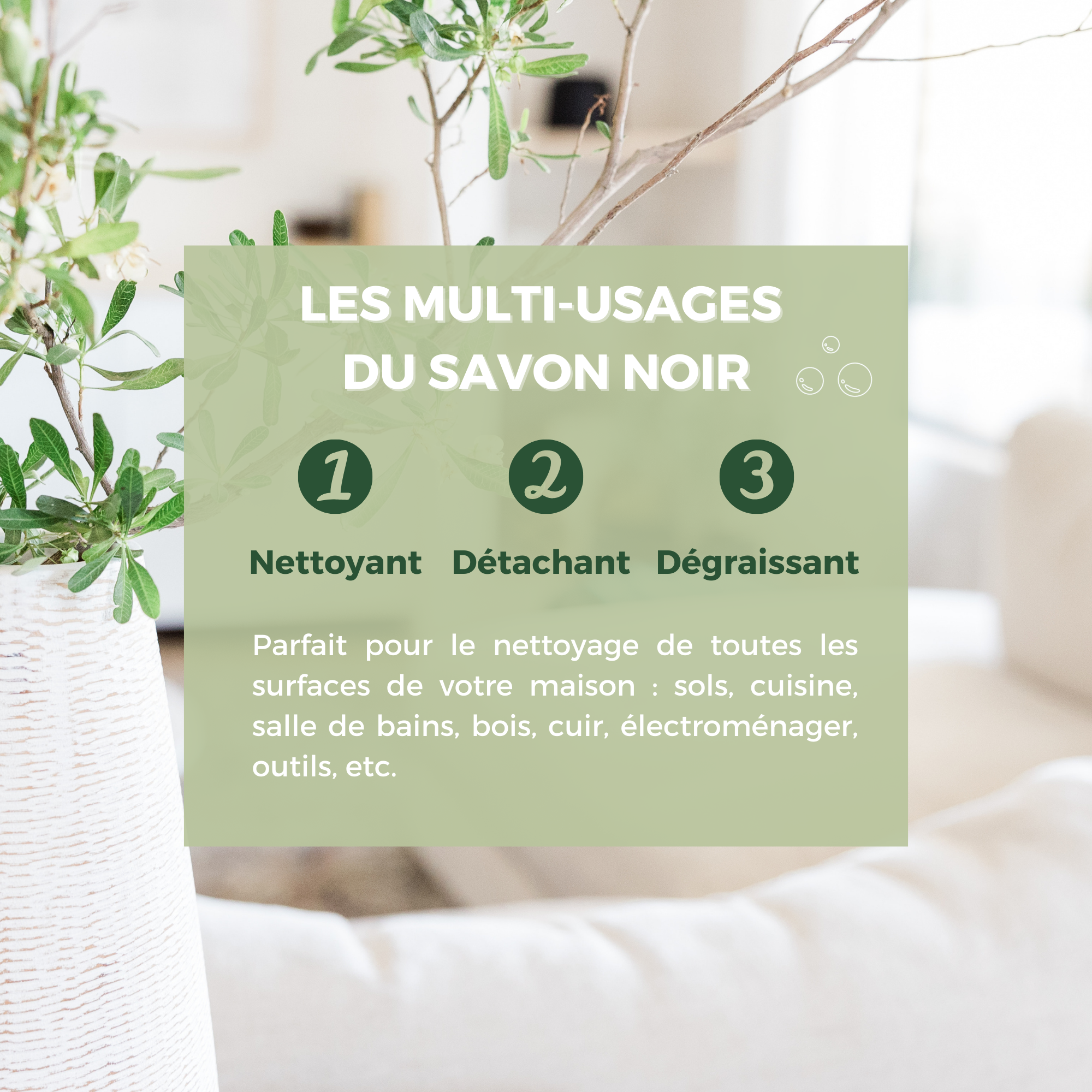
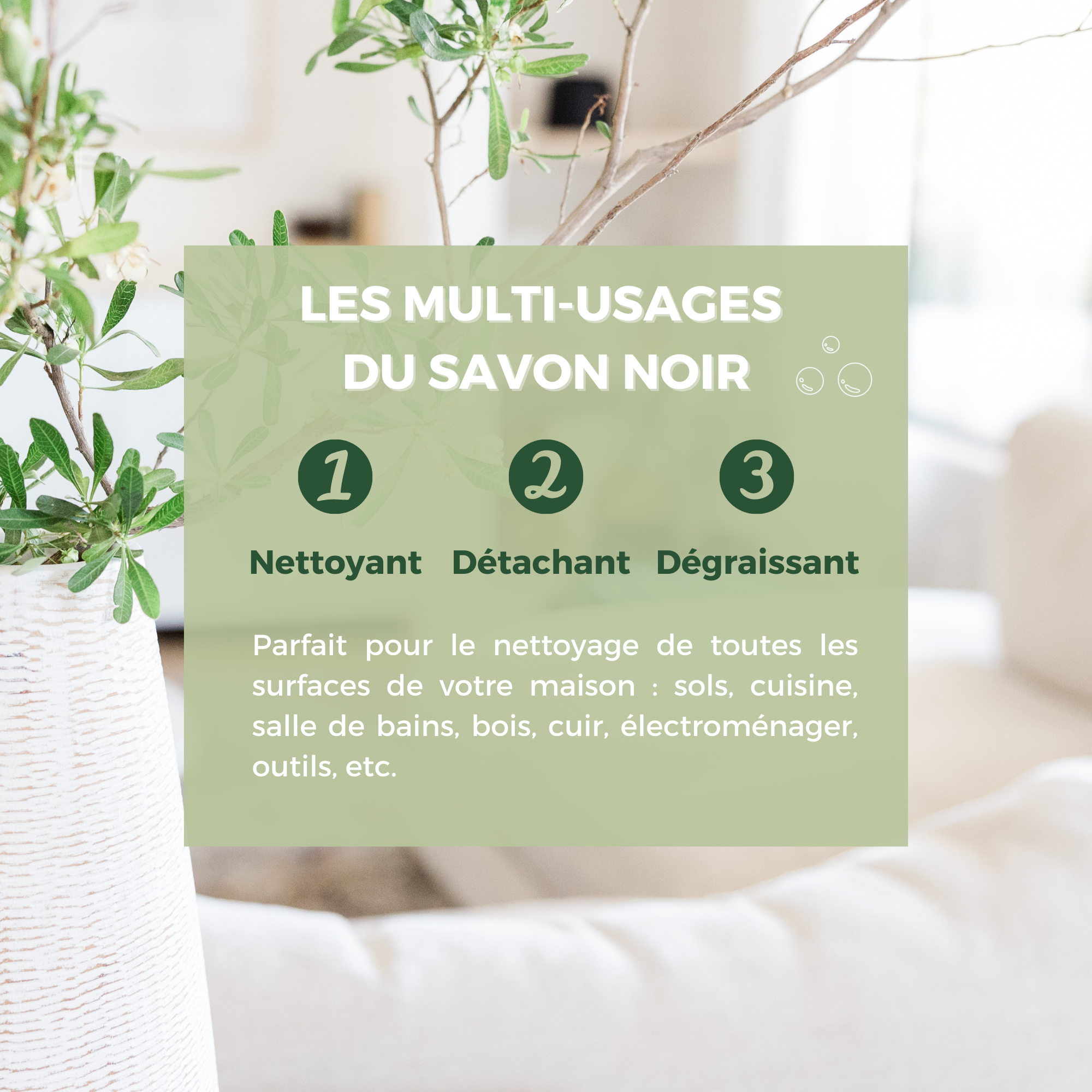
Once mixed with water, it becomes more fluid and creamy, making it easier to use for everyday cleaning. It's known for cleaning, degreasing, and shining various surfaces: floors, metals, walls, leather, laundry, and more. Furthermore, black soap can also be used as a homemade insecticide .
Effectiveness of household black soap
Black soap is well-known for its cleaning, degreasing, and stain-removing properties. Its composition, based on vegetable oils and black olive potash, contains molecules called "amphiphilic," which attract water, and "lipophilic," which attract grease. Thanks to this balance, simply mixing black soap with water is enough for it to clean, emulsify, and dissolve impurities and stains. Its composition makes it a formidable ally for daily cleaning and laundry.
Thus, household black soap offers numerous advantages compared to the chemical products more commonly used for domestic cleaning:
- Its composition consists exclusively of natural ingredients: olive oil, black olive potash, water… These biodegradable ingredients do not imply any harmful effects on the environment, skin or health.
- Solutions made with black soap can be prepared at home using homemade recipes. In this way, using black soap helps reduce waste from the plastic packaging of household cleaning products.
Uses of black soap for cleaning and maintaining the house and garden
Black dish soap
Say goodbye to expensive, irritating, and polluting dishwashing liquids and hello to an equally effective and more eco-friendly solution: liquid black soap. It's the ideal product for degreasing, cleaning, and restoring shine to your dishes. It's also gentle on hands and reduces the risk of irritation for sensitive skin. Environmentally friendly, it contains no substances harmful to aquatic ecosystems. Washing your dishes with household black soap thus offers a double benefit, for both your health and the environment.
To use it, you need to:
- Dilute a tablespoon of black soap in a sink filled with hot water;
- Soak a sponge in the soapy solution;
- Clean your dishes by scrubbing away food residue;
- Rinse with clean water to remove any remaining impurities.
Black soap for the floor
Given its cleaning, degreasing, and stain-removing properties, black cleaning soap is ideal for washing, sanitizing, and shining various types of flooring: marble, tile, parquet, PVC, concrete, ceramic, etc. The antiseptic properties of black soap make it an excellent cleaning agent. Ideal for bathroom fixtures or kitchen furniture, it can also be used to waterproof porous surfaces, such as wood.
To use black soap on a stone or tiled floor , simply dilute the soap in a bucket of water. As usual, use a mop soaked in the cleaning solution and wrung out. Let the product sit for a few minutes before rinsing. You'll get a clean and shinier floor! For parquet floors, however, be sure to rinse thoroughly to remove all traces of soap.
Black soap for windows
A black soap-based cleaner is incredibly effective for cleaning various surfaces, including windows! Here are our tips for preparing a solution with black soap:
- Dilute a tablespoon of black soap in a bucket of warm water;
- Add a few drops of white vinegar;
- Dip a clean cloth in the solution and wring it out lightly;
- Clean the entire surface of the windows with the cloth;
- Use a dry cloth to wipe the windows and dry them.
This technique of using black soap as a window cleaner allows you to restore clean and sparkling windows. The final drying process, in addition to removing any remaining product residue, also gives your windows a new shine. Thanks to black soap, you can therefore enjoy sparkling windows protected from dust and surrounding dirt.
Using black soap for plants
In addition to being an ideal alternative to household chemicals, black soap is also effective for caring for indoor and outdoor plants. In a home, plants can accumulate dust and impurities, which settle on their leaves over time. A solution containing black soap can gently clean plants and maintain your garden, all while respecting the environment.
Black soap, a natural insecticide for indoor and outdoor plants
Household black soap is a valuable ally for maintaining your home, but also your garden! Indeed, this plant-based product can be used as a natural insecticide for indoor and outdoor plants.
To use black soap as an insecticide for your houseplants:
- Dilute one teaspoon of liquid black soap in one liter of lukewarm water;
- Pour the solution into a spray bottle;
- Spray the solution on the stems and leaves affected by pests;
- Repeat the treatment once a week.
This solution allows you to benefit from a natural, effective and inexpensive insecticide!
To treat your outdoor plants with household black soap , you will need:
- Dilute two tablespoons of liquid black soap in 4 liters of lukewarm water;
- Pour the solution into a garden sprayer;
- Apply the solution to the affected plants;
- Repeat the application every two weeks.